
Artos™ now spans conventional rotary axes, linear travel, partial arcs and large-diameter shafts, in both board-level and enclosed designs. The way to navigate it is to start from the application geometry, then pick the readhead family, the matching ring or scale, and finally the integration format.
When Artos™ was first introduced in 2024, it started as a true absolute magnetic encoder system for rotary motion control applications. The platform was later extended to linear and partial-arc measurement, followed by FlexAB™ for large-diameter rotary applications.
Today, Artos covers a much broader range of motion-control requirements, with different readhead variants, magnetic rings and scales, as well as board-level and enclosed designs.
With that flexibility comes an obvious question:
How do all the Artos components fit together into a functional system?
The easiest way to understand Artos is to start with the application rather than individual product names.
Do you need to measure:
- a conventional rotary axis?
- a linear axis?
- a partial arc?
- or a very large-diameter shaft?
Once the application geometry is clear, the appropriate Artos readhead family can be selected, followed by the compatible magnetic ring or scale. Finally, the operating environment determines whether a compact PCB-A version or a more robust enclosed readhead is the better fit.
One platform, four application architectures
At its core, Artos is a true absolute magnetic encoder system. Position information is available immediately after power-on, while the non-contact measurement principle enables high resolution, low latency and operation in highly dynamic control loops.
The current Artos platform can be organised into four main application architectures:
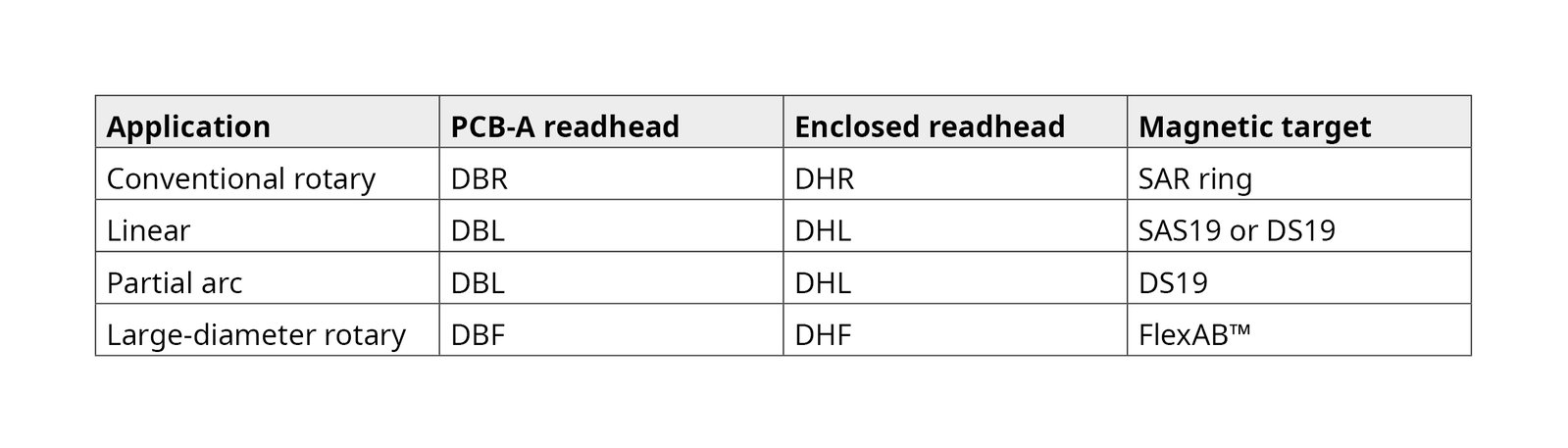
The naming follows a clear compatibility logic. DBR is the PCB-A readhead for SAR rings, DBL for linear and partial-arc scales, and DBF for FlexAB. The enclosed versions follow the same structure with DHR, DHL and DHF.
From there, selection becomes much more straightforward.
1. Conventional rotary applications: DBR or DHR + SAR
For a conventional rotary axis, the Artos system uses a DBR or DHR readhead together with a SAR solid absolute magnetic ring.
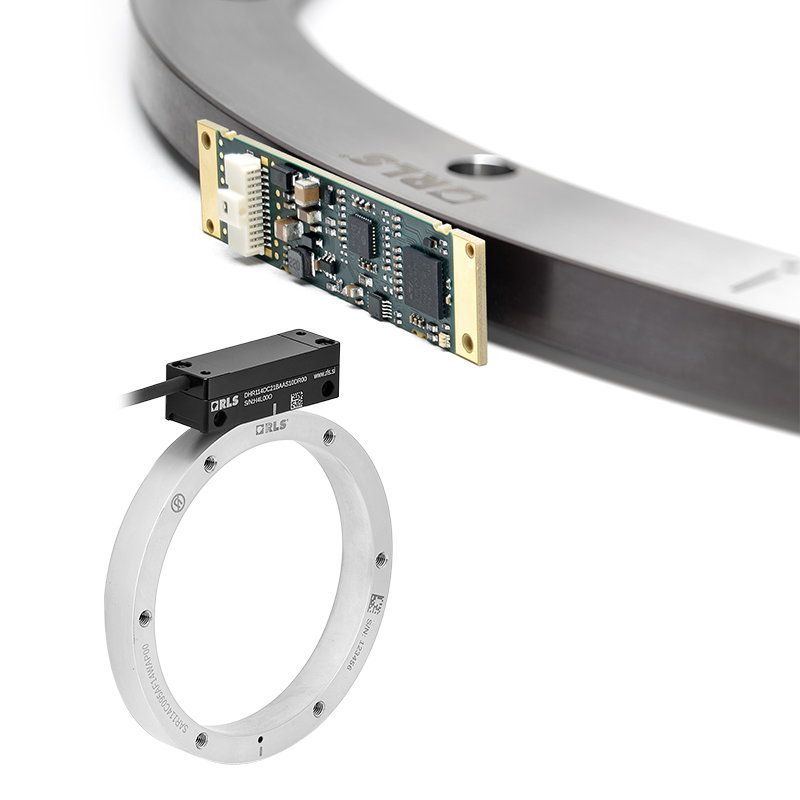
The first decision is how the readhead should be integrated.
DBR for compact, cost-effective OEM integration
DBR is the PCB-A version.
Its compact size and low weight make it suitable for installations where space is limited and the surrounding machine provides the necessary protection.
Board-level integration can also be a cost-effective approach, particularly for OEM designs where the readhead can be incorporated directly into the existing mechanical structure.
Dedicated brackets — ACC079 flat and ACC080 angled — are available to simplify installation where required.
DHR for a protected, ready-to-install solution
For applications requiring greater environmental and mechanical protection, DHR provides the enclosed alternative.
The underlying measurement principle remains the same, but the housing provides a more robust installation for demanding industrial environments.
Then choose the SAR ring
Both readhead options work with SAR solid absolute magnetic rings.
SAR rings are available with outside diameters from 57 mm to 478 mm, covering a broad range of conventional rotary axes.
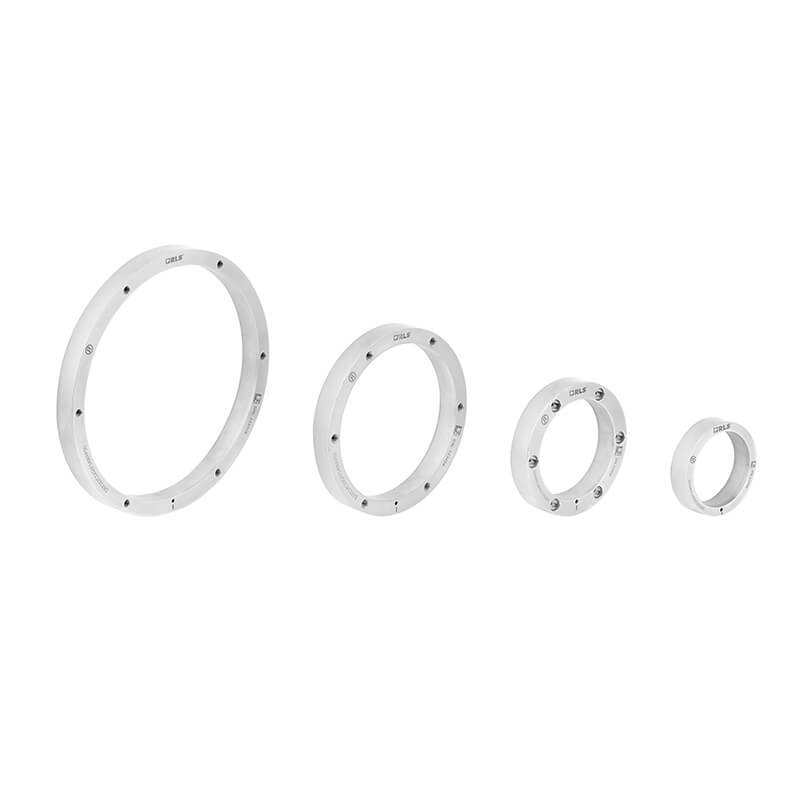
Different protection variants are available as well.
An exposed ring is suitable for environments where aggressive liquids are not expected. Covered versions provide additional protection of the magnetic layer, while fully welded versions provide IP67 protection for more demanding conditions involving oils, coolants, grease and other contaminants.
The result is a rotary system that can be configured according to shaft size, installation space and environmental conditions.
2. Linear applications: DBL or DHL + SAS19 or DS19
For linear motion, the corresponding Artos readheads are DBL and DHL.
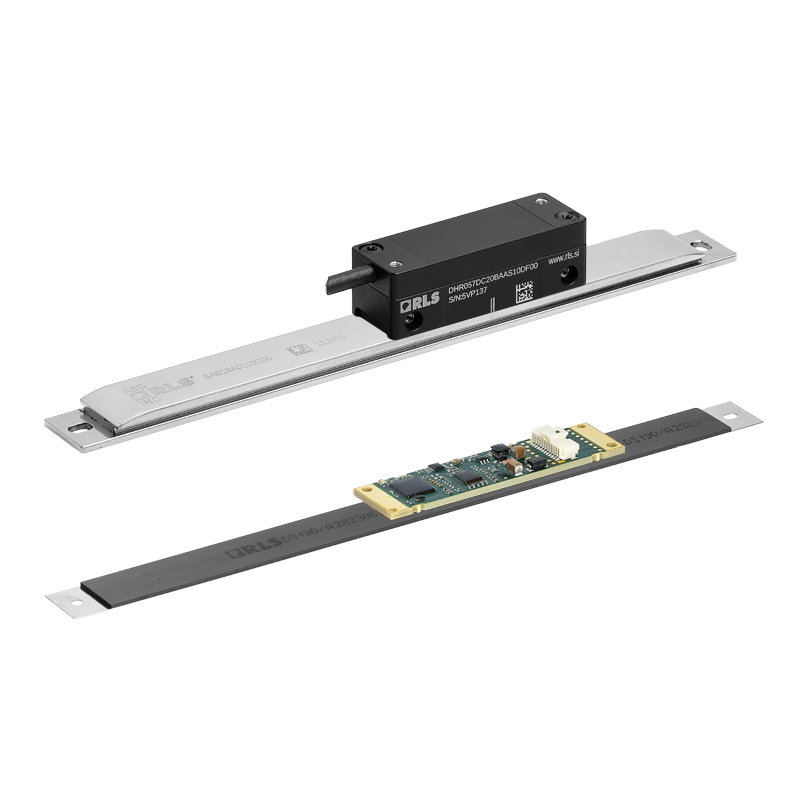
Again, DBL provides the compact PCB-A approach, while DHL provides an enclosed alternative.
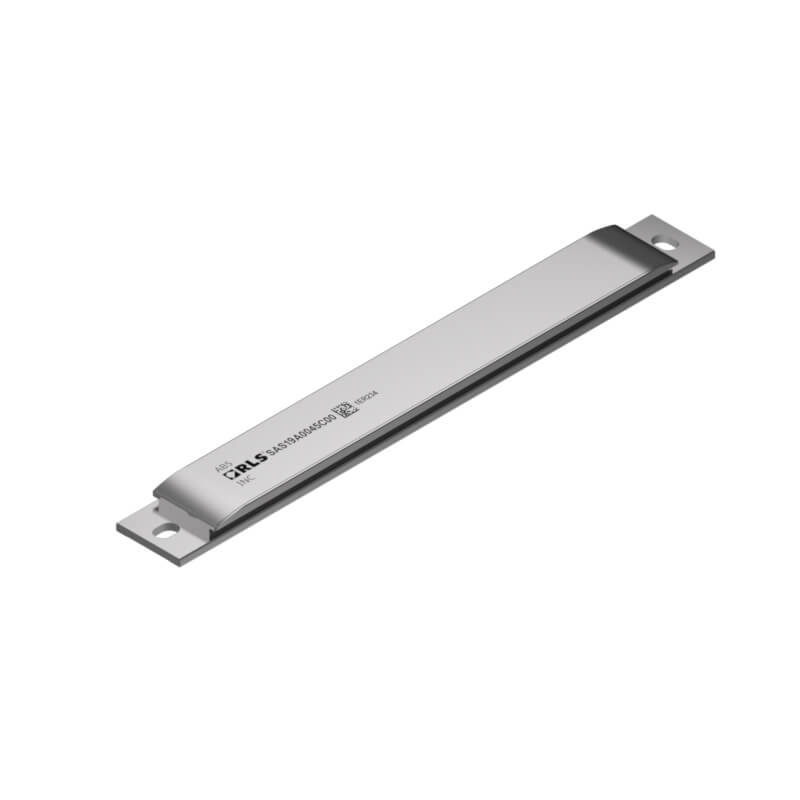
Once the readhead format has been selected, the choice between SAS19 and DS19 depends mainly on the mechanical construction and measuring length.
SAS19: a solid scale with a robust structure
For applications where a rigid scale can be integrated directly into the machine, SAS19 provides a solid and mechanically stable solution, particularly where higher linear accuracy is required.
It offers accuracy of up to ±6 µm/m and is available in exposed and fully welded configurations.
The fully welded version provides additional resistance to contamination and liquids, making it suitable for more demanding industrial environments.
Typical configurations are therefore:
- DBL + SAS19 — for compact board-level integration
- DHL + SAS19 — for an enclosed readhead
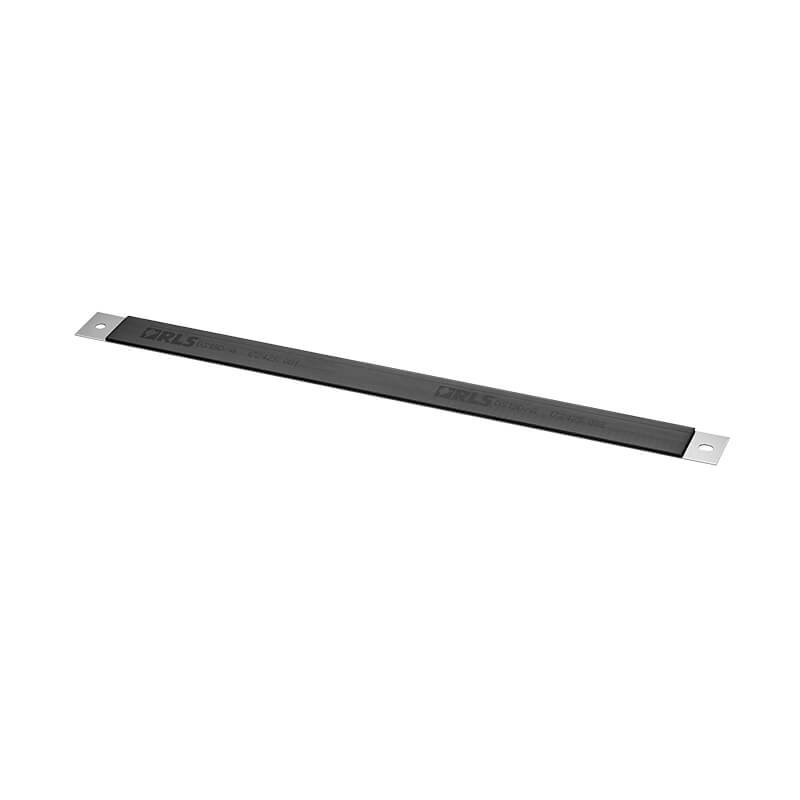
DS19: flexible scale for longer travel
For longer axes, DS19 provides a flexible alternative with accuracy up to ±10 µm/m for measuring lengths up to 8 m, and ±15 µm/m for lengths from 8 m to 32 m.
DS19 is compatible with Artos and can support measuring lengths of up to 32 m, depending on the selected configuration.
Typical configurations are:
- DBL + DS19
- DHL + DS19
This extends the same Artos platform from relatively compact linear positioning systems to long machine axes.
3. Partial-arc applications: DBL or DHL + DS19
Artos can also measure motion along a curved path.
For partial-arc applications, DBL or DHL is combined with a DS19 flexible absolute magnetic scale.
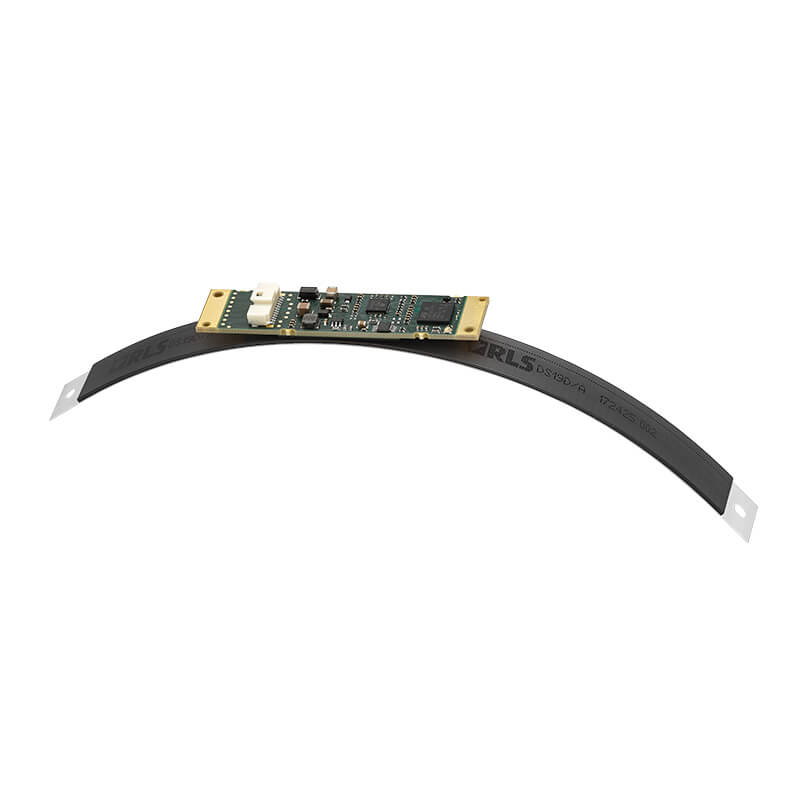 DBL — PCB-A
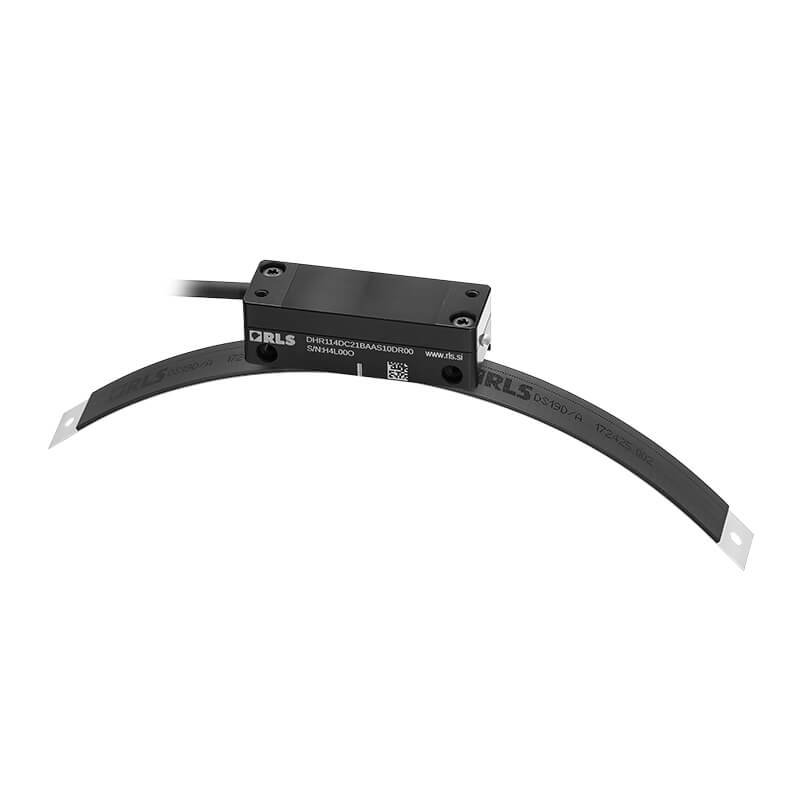 DHL — enclosed
Rather than forming a complete ring, DS19 follows only the required section of the circumference.
This can be useful for mechanisms that rotate through a limited angle or where installing a conventional rigid ring is impractical.
Artos supports DS19 partial-arc configurations from approximately 200 mm diameter.
A key distinction is that a DS19 partial-arc installation does not form a continuous 360° scale. Because the two ends of the scale remain separate, there is an unmeasured section between them.
This makes DS19 suitable when the machine only needs position feedback over a defined angular range.
However, application geometry is not the only consideration.
On large shafts, fitting DS19 as a partial arc can require relatively careful installation. In some applications, FlexAB may provide a more straightforward mechanical installation even when only partial-arc measurement is required.
So the final choice between DS19 and FlexAB should also consider installation accessibility and shaft geometry, not only whether the motion is continuous.
4. Large-diameter rotary applications: DBF or DHF + FlexAB™
For large shafts where a conventional rigid SAR ring is no longer practical, Artos can be combined with FlexAB™.
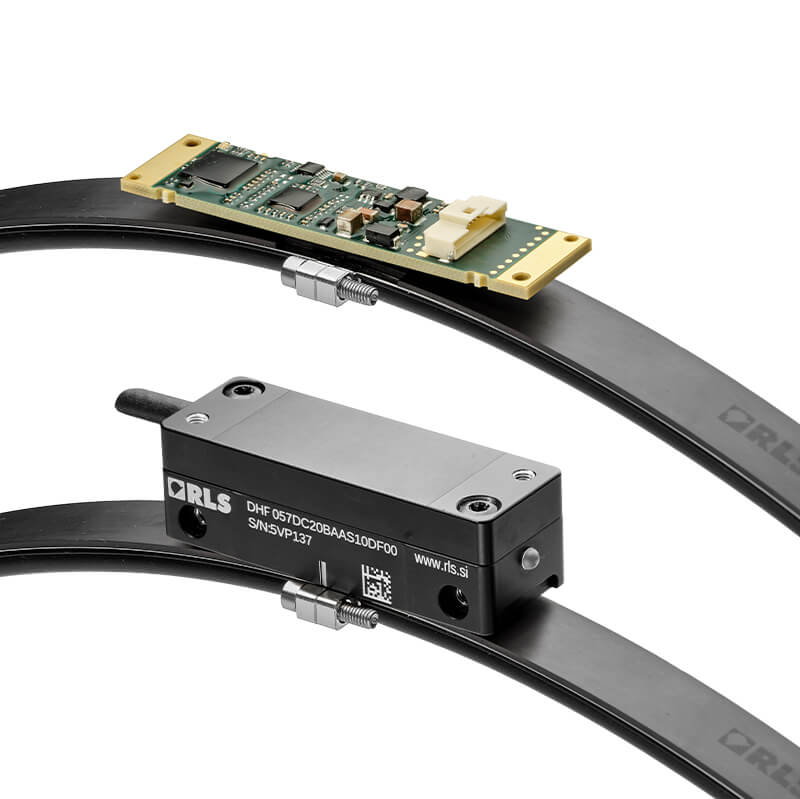
The corresponding readheads are:
FlexAB is a flexible absolute magnetic scale system designed to be installed around the circumference of a large shaft.
Unlike a conventional flexible scale with two separate ends, FlexAB incorporates a joining and tensioning mechanism that creates a continuous magnetic measuring system around the shaft.
This allows full-circle 360° absolute measurement.
The standard documented diameter range is 500 mm to 2,500 mm. For selected applications, smaller diameters of approximately 400 mm may also be possible; these configurations should be discussed with RLS according to the specific installation requirements.
DBF or DHF?
For a protected machine environment where compact integration and cost are priorities, DBF provides the PCB-A solution.
For harsher environments or applications with more demanding EMC requirements, DHF provides the enclosed alternative. The FlexAB documentation specifically positions DHF for harsh and EMC-demanding environments and DBF for more protected installations.
This extends Artos from conventional rotary rings into very large rotary structures without requiring a large rigid precision ring.
DS19 partial arc or FlexAB? Look beyond the motion itself
At first glance, the selection may appear simple:
- partial rotation → DS19
- full 360° rotation → FlexAB
In practice, there is another factor to consider: installation.
DS19 can provide an effective partial-arc solution, but mounting a flexible scale accurately around a large shaft can be more demanding.
FlexAB was developed specifically for installation around large diameters and incorporates its own joining and tensioning concept. It can therefore also be attractive in applications where only part of the rotation is actually used.
The choice should therefore consider:
- required angular range,
- shaft diameter,
- available installation access,
- mounting complexity,
- and whether continuous 360° measurement may be required now or in the future.
For a straightforward linear-to-curved transition, DS19 can be the natural choice.
For a large shaft where installation practicality becomes a major concern, FlexAB may offer advantages even beyond full-circle measurement.
PCB-A or enclosed readhead?
Across the Artos platform, each application family provides two integration approaches.
PCB-A: DBR, DBL and DBF
The DBR, DBL and DBF variants use a compact PCB-A design.
Advantages include:
- small installation footprint,
- low weight,
- flexible OEM integration,
- and a potentially more cost-effective system architecture.
RLS can also provide dedicated brackets — ACC079 and ACC080 — to support PCB-A readhead installation.
The current board-level Artos platform supports speeds up to 30,000 rpm for rotary applications and 20 m/s for linear applications.
Enclosed: DHR, DHL and DHF
The DHR, DHL and DHF variants provide an enclosed alternative.
The enclosed Artos readheads provide IP67 protection and are better suited to applications where the sensor is directly exposed to liquids, contamination or other demanding industrial conditions.
The sensing principle is the same.
The difference is primarily how the encoder is mechanically integrated and protected within the machine.
Artos™ at a glance
The Artos platform becomes much easier to navigate when selection starts with the application.
Linear axis
Readhead — DBL or DHL
Carrier — SAS19 for a solid, high-accuracy solution
or DS19 for longer or more flexible installations
Partial-arc measurement
Readhead — DBL or DHL
Carrier — DS19, with FlexAB also worth considering where large-diameter installation is a key challenge
Then choose between PCB-A and enclosed integration according to the machine environment, installation requirements and system cost.
That is the Artos concept:
one true absolute magnetic encoder platform, configured around the application rather than a fixed encoder format.
From compact rotary axes to long linear travel, partial arcs and multi-metre shafts, the combination of the right readhead and magnetic information carrier allows Artos to adapt to very different motion-control architectures.

